Argentina Fund
“Dr. Alfredo Lanari Medical Research Institute of the University of Buenos Aires.”
Request for funds for the construction of three operating rooms and their support areas.
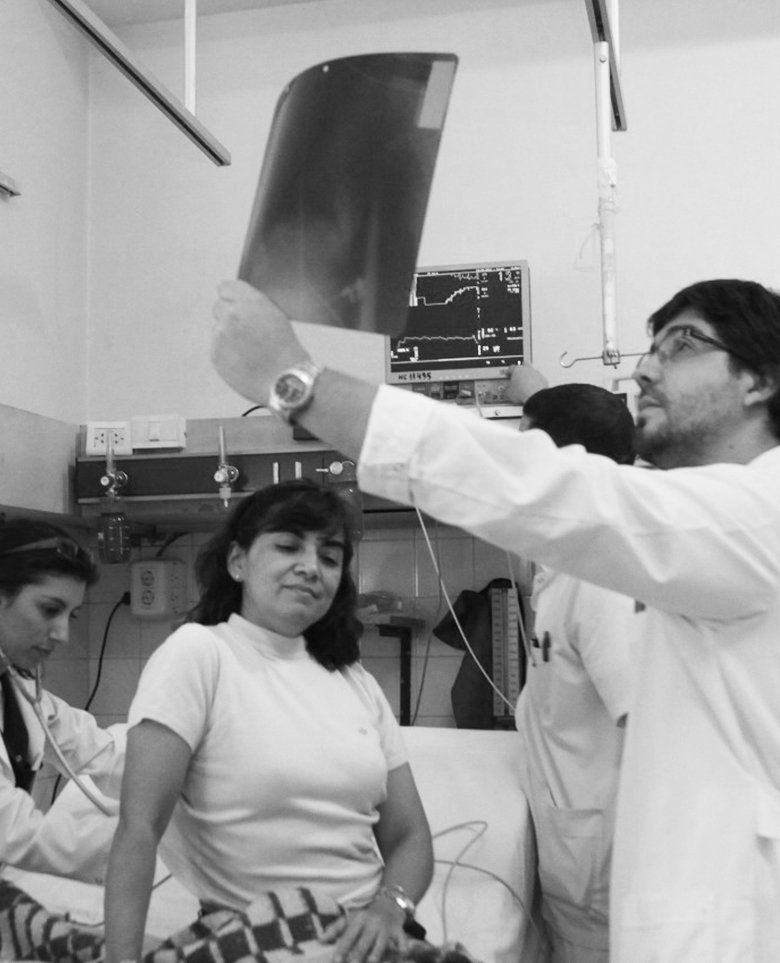
The Alfredo Lanari Medical Research Institute is part of the University Hospital Network of the University of Buenos Aires. It opened in 1957 under the direction of Dr. Lanari. In June 1957, the first kidney transplant was performed, almost simultaneously with the United States transplant, and in 1958, the country’s first artificial kidney was operated in a public hospital. It was the first hospital to have research laboratories and to begin modern clinical research in Argentina.
It is a highly complex hospital that serves patients from all over the country. It has a team of basic and clinical researchers. The attending physicians participate in the research, and a Teaching and Research Committee approves and oversees all experimental and clinical studies. It has 60 inpatient beds in the Medical Clinic, 2 for kidney transplants, and 7 intensive care beds. Outpatient clinics are available for social security and private health insurance providers.
Request for funding for the construction of three operating rooms and their support areas at the “Dr. Alfredo Lanari Medical Research Institute of the University of Buenos Aires.”
I am writing to you to request assistance from OMPP/WOFP Org. To obtain funds to help us carry out our humanitarian programs in Argentina, the project consists of the construction and remodeling of three (3) operating rooms and their support areas at the Dr. Alfredo Lanari Medical Research Institute of the University of Buenos Aires. This project is aimed at covering urgent social needs related to the health of citizens and strengthening the hospital, as well as other assistance networks for vulnerable sectors of our country.
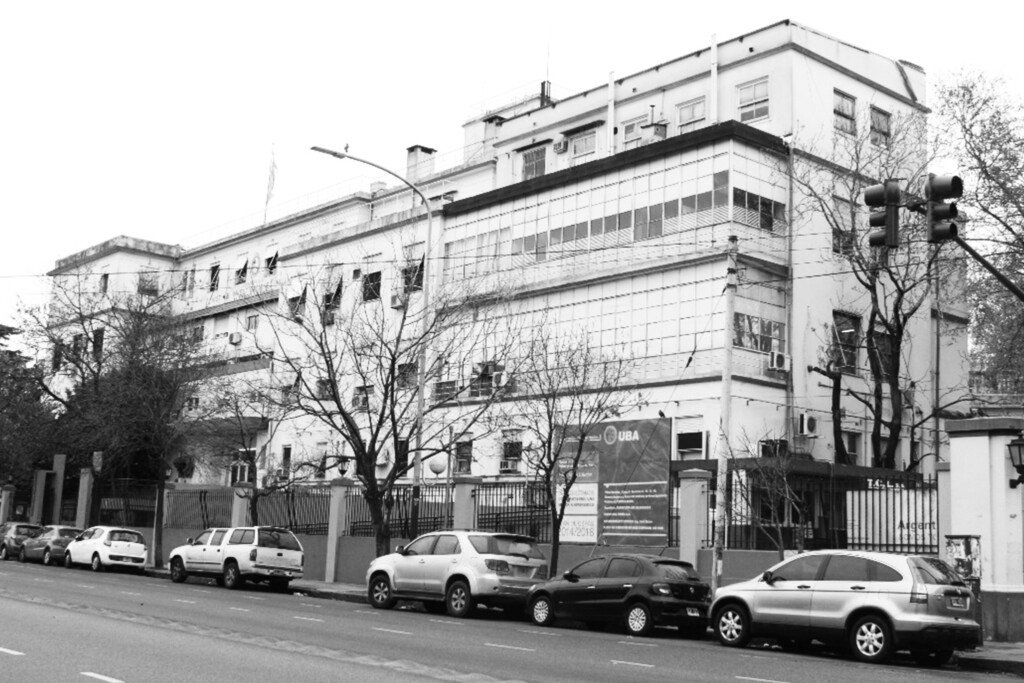
This project is part of a strategy of high social value, with a direct and measurable impact on the living conditions of thousands of people. It reaffirms the commitment to an inclusive and supportive vision of development, where access to decent healthcare is understood as a basic right and not an exception. The estimated budget for this project for the construction and remodeling of three (3) operating rooms and their support areas at the Dr. Alfredo Lanari Medical Research Institute of the University of Buenos Aires Aires amounts to a total of USD 814,598.-
Request for funding for the creation of a food processing plant for humanitarian purposes. UBA Project.
The University of Buenos Aires (UBA), founded in 1821, is one of the most prestigious educational institutions in Latin America and the Spanish-speaking world. Its model of free, open-access public education has been a pillar in the training of millions of Argentine and international professionals.
Its impact on society is reflected in several aspects:
• Social mobility: It allows students from diverse socioeconomic backgrounds to access quality higher education without economic barriers.
• Knowledge production: It is a key center for scientific, technological, and cultural research, contributing to the country’s development.
• Social and political commitment: Historically, it has been a space for debate, critical thinking, and civic participation.
• International recognition: It has produced renowned graduates, including Nobel Prize winners, which reinforces Argentina’s academic prestige worldwide.
In short, the UBA not only guarantees the right to free, excellent education, but also promotes social, scientific, and cultural progress in Argentina.
Within the UBA, there are various units and organizations that go beyond classroom teaching. Examples such as the Dr. Alfredo Lanari Medical Research Institute, the San Pedro Food Processing Plant, the José de San Martín Clinical Hospital, the Ángel Roffo Oncology Institute, and other institutions within the UBA, play a key role in:
• Scientific and technological research, conducting clinical studies and scientific projects that generate knowledge in specific areas.
• University outreach, as they transfer this knowledge and services to society.
• Assistance and services, as many of these units offer free, specialized medical care, technical advice, or practical solutions to social and productive problems.
These activities are often grouped under the term university outreach and knowledge transfer, which, along with teaching and research, constitute the three basic functions of a public university.
Request for funds for the creation of a food processing plant for humanitarian purposes.
The project involves the creation and implementation of a food processing plant, aimed at meeting urgent social needs related to food security and strengthening community, school, and neighborhood soup kitchens, as well as other assistance networks for vulnerable groups in our country.
The creation and implementation of this plant responds to a profoundly humanitarian vision, based on values of solidarity, social justice, and commitment to collective well-being. The main objective is to produce, process, package, and preserve food with nutritional quality standards, ensuring its efficient and safe distribution through organized logistics that enhances the project’s territorial impact.
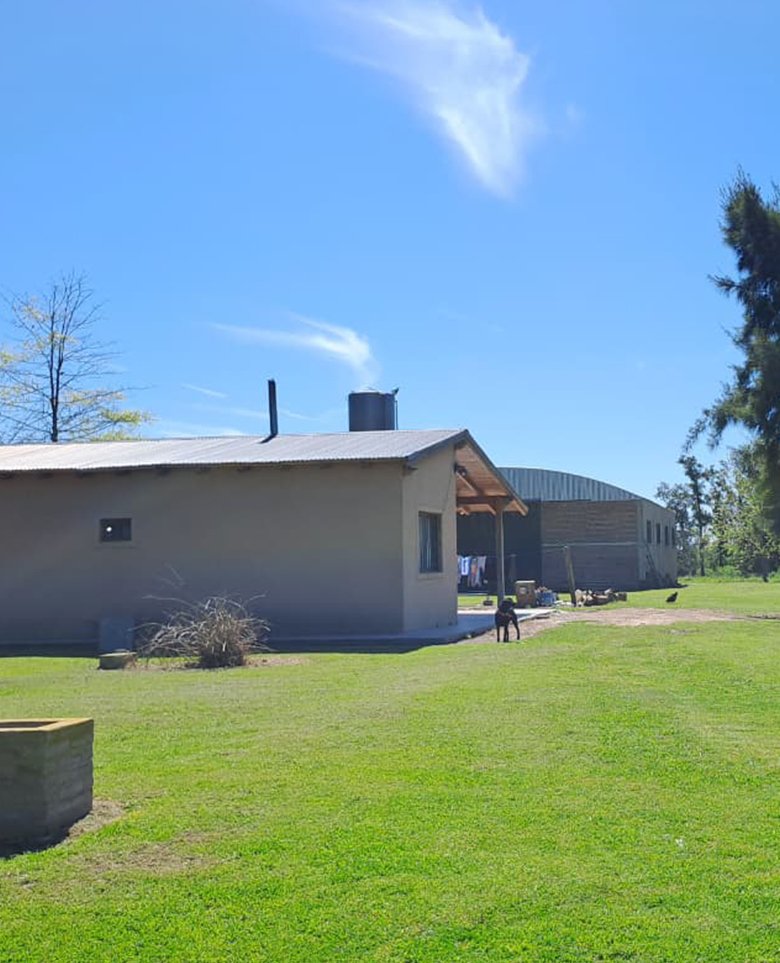
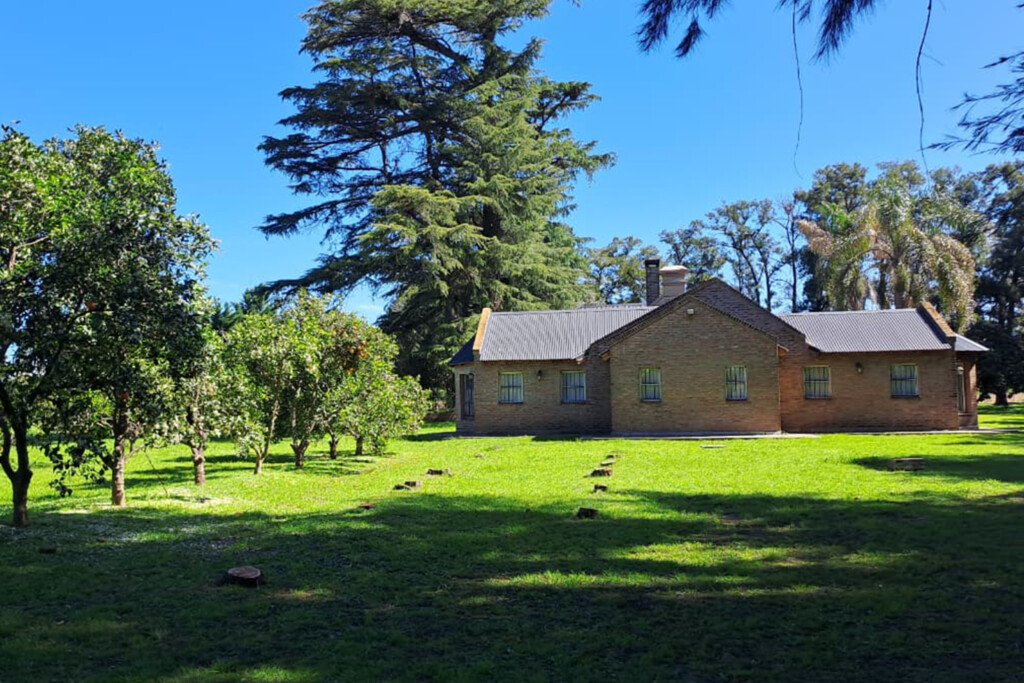
By means of RESFC-2023-187-APN-AABR#JGM dated 04/08/2023, the property located at Provincial Route No. 1001, Km 7, in the town of RÍO TALA, SAN PEDRO District, Province of BUENOS AIRES, was assigned to the UNIVERSITY OF BUENOS AIRES for the purpose of establishing the SAN PEDRO AGROINDUSTRIAL PARK. This will promote greater technological development in the agricultural sector, generate employment, improve the standard of living of rural residents, and foster greater integration with industry. This will also allow the creation of a food processing plant and distribution of its products to the food-insecure population.
This initiative, in addition to providing immediate responses to the growing food demand, will connect technical and academic knowledge with concrete public policies, integrating areas such as nutrition, food science, food engineering, social planning, and food logistics.
The budget for the project to create and operate the food processing plant amounts to USD 2,379,917.72.
(CLICK THE LINK TO ACCESS THE PROJECT DETAILS IN THE ATTACHED FILE)